Modern Technology Serve-you-not-the-Other

Filed under by Nahal Ahmed on 3:33 PM

  • We have too many communication devices that must be checked regularly for messages. Constant interaction with technology can put unwanted strain on our relationships. Our techno tools can be dangerous, because they divert our attention from other more important tasks, e.g. driving or crossing the street.

It's all too easy to send/forward messages to the wrong person, potentially causing job or relationship problems.
"Make modern technology serve you, not the other way around "
Similarly, computer games serve as a temporary -- and habit-forming -- escape from life's problems. The Internet creates new and frightening opportunities for credit card and identity theft. Other unintended personal information can end up on the web, on social networking sites, or worst of all on YouTube. Technology allows for greater personal and professional isolation. These are just a few of the problems we encounter on the new technology frontier. How can we partake of the latest advances in communication while keeping the stress they create down to a dull roar? Here are some ideas:

  • Limit the number of people who have access to all of your contact information by designating some of your techno tools as "work only."
  • Limit the number of people who have access to all of your contact information by designating some of your techno tools as "work only."
  • Don't send out critical correspondence when you are overly tired, stressed or in a rush.
  • When composing a sensitive communication, don't send it out immediately. Instead save, re-read, and edit it as necessary, because once it's sent, you can't take it back.
  • Don't spend too much time without real human contact. No amount of correspondence can take the place of real face-to-face interaction with family, friends and business associates.
  • Rethink your use of techno tools if they begin to put unwanted strain on any of your important relationships, be they personal or professional.
  • Avoid letting "net-surfing" or computer games become escapes from life's problems. As with other unhealthy escapes, e.g. substance abuse or overspending, the problems will still be there when reality hits, which it inevitably will.
    In sum, our techno tools are powerful devices that can either be used to help or to hinder us. So please exercise good common sense with these amazing devices; When used properly, they can open up a whole new world of possibilities, personally and professionally.

Interseting Places of India

Filed under by Nahal Ahmed on 9:49 PM

Two decorated elephants at HAW Mahal (Palace of winds) Jaipur , Rajhistan


No matter where you travel around the world, big cities and popular tourist attractions are likely to be expensive. But if you don’t mind skipping the lap of luxury, you can visit an exotic location for very little money.

The most expensive part of a trip to India is getting there. After that, costs are stunningly low. On average, a traveler’s daily expenses are lower than anywhere else in the world. A beer will cost about $1.25, a budget hotel room $10 or less, a meal $2 and a cup of tea literally pennies. With
incredible scenery, history and culture, plus a wide variety of attractions, India is our top recommendation for travel on the cheap.

Nepal (Prayer Flags)


Travel costs are a little higher here than in neighboring India you’ll pay approximately $2.14 for a beer but seldom by much. You can find budget accommodations for less than $5, and the same amount will feed you for a day. If you’re here for the famed trekking and mountaineering experiences, long jaunts cost a pittance. You can trek without porters or guides on $7, but even an organized expedition certainly recommended for the higher elevations will set you back as little as $25/day.

Worst Things to Say at Work

Filed under by Nahal Ahmed on 9:37 PM

“That’s not my job.”
If somebody comes to you with an issue, there’s probably a reason. It might be your responsibility to deal with it or your input is valued. Either way, use the situation to prove you’re a team player and a problem solver. Plus, it pays to earn some good office karma because you never know when you’ll need help from other colleagues

“Yeah, no problem.” (If you don’t mean it.)
If you take on a task with a smile but have no intention of actually completing it, you’re going to earn a reputation as an unreliable person. If you know you can’t or won’t complete the project, be honest about it. Your colleagues are relying on you, so your decision not to follow through impacts their jobs, too.

“Don’t tell anyone I said this, but … ”
If it’s really a secret, keep it to yourself. Whether you know someone’s about to get fired or what the boss’ salary is, you’re going to get credit for spreading the news. You’re not exempt from being the subject of office chatter, either. Don’t expect your gossip-loving co-worker to suddenly have tight lips when it comes to divulging your secrets.

“It’s not my fault.”
When your boss comes to you with a problem, the last thing you want to do is to deflect blame to someone else. Maybe it isn’t your fault, but remember that you’re not in a courtroom and nobody’s looking for the culprit right now. All that matters is making sure the problem is solved and doesn’t happen again. You can deal with the real issue later, but you’ll just make yourself look worse if you spend more time finger-pointing than problem solving.

“To be honest with you … ”
First, any time this phrase is used, you know something negative is going to follow. More important is the message it sends to others. “Does this colleague have to identify when he or she is being honest with you? When that phrase is not used, should you then doubt the integrity of the statement?”

“I just didn’t have enough time for that.”
In case you didn’t realize, everybody’s pretty busy these days. When your boss asks you to do something, chances are it’s not really an option. If your main concern is accomplishing the task on time, Lampton suggests you explain the situation. Mention how busy your schedule is but that you can accommodate the request if some other projects are rearranged. You’ll show that you take each assignment seriously and only want to turn in your best work.

“. . . or else.”
Giving anyone in the office an ultimatum rarely ends in success. Whether you say it to a colleague or your new intern, you’ll only gain enemies and earn a reputation for being difficult. If cordial requests don’t work and threats are the only way to get things done in the office, you need to re-evaluate your work environment.


Interesting Tips For Giving Feedback at Job

Filed under by Nahal Ahmed on 9:04 PM


Say this
"I noticed that you've missed a few deadlines lately." Not that: "You seem disinterested in your work lately." When giving feedback, it's important to focus on an employee's specific behavior, not the impression you had of it. Focusing on the specific behavior that led to that impression opens up the door to have a clear discussion about the reasons why, rather than making the employee feel judged, alienated or confused.

Say this
"You were effective when you ..." or, "You could've been more effective when you ..." Not that: "Good job." In other words, feedback that is generic and vague is also useless. Focusing on specific actions has two major benefits: It prevents employees from taking the feedback personally, and it also helps them understand what they should do -- or not do -- in the future.

Say this
"I'd like to offer you some feedback on this report, is that OK with you?" Not that: "Your report was ..." Whenever possible, request to give feedback. Not only will your employees appreciate the gesture, but they'll be more likely to take the feedback into consideration and apply it to try to improve.

Say this
"Your presentation was extremely well-researched. Here's where it could've been stronger ..." Not that: "The research you used in your presentation was a little weak in some areas." Preface with the positive. Point out what the employee is doing well before delving into areas for improvement.

Say this
"Tell me, what was your understanding of what I asked you to do?" Not that: "You seem to have misunderstood what I asked you to do." There's that assumption creeping back in again, which does little to open up an honest, productive conversation.


Cheapest Destinations for Tourists

Filed under by Nahal Ahmed on 8:54 PM

Morocco


Two of the biggest places in Morocco the beaches and the markets are free. Everything else is pretty cheap: An inexpensive hotel room will cost you around $25, while you can sip Morocco’s famed mint tea for 65 cents (a beer costs more, about $3.23). To travel between cities, take the trains, which are fast, frequent and cheap: The 300-mile journey from Tangier to Marrakech will set you back only around $2

Mexico


Most Americans should stay away from the border areas, where drug-related violence has been on the rise. But tourists who choose to avoid the country altogether are missing out on great deals and inexpensive travel opportunities. Visit the safer areas, 100 miles or so south of the U.S. border, and for the cheapest trip, steer clear of resort towns. You’ll find beer for $1.50 and admission to archaeological sites for about $3

Bulgaria


Prices in Bulgaria have risen since 2007, when the country joined the European Union, but it’s still an outstanding bargain compared with Europe as a whole. This is especially true if you steer clear of the capital, Sofia; besides, the soul of Bulgaria lies in its lovely small towns and villages. If the sands call, though, Bulgaria’s Black Sea coast is one of the cheapest places to enjoy a sunny beach resort. A beer will cost you about $1.30 here, and a bottle of decent wine can be had for as little as $3.50.

Poland

Europe is generally not a cheap place to visit, except for Eastern Europe — but in recent years even this region has become expensive. Fortunately for travelers, Poland is about the cheapest place you can go in Europe. A beer here will cost you as little as $1, a burger around $3 and a cup of coffee $3.50. Travel costs will likely rise here before long, and Poland is expected to adopt the euro within a few years, so now’s the time to go.

Indonesia

If you’re willing to live as the locals do, Indonesia can be wonderfully inexpensive. A beer will cost you around $1.65, but you can eat for pennies by subsisting on the Indonesian staple: rice, grown in the nation’s lovely terraced rice fields, which often are tourist attractions in their own right. If you choose to go more of a gourmet route, a seafood dinner with drinks might cost as much as $10. Indonesia is a vast nation of more than 17,000 islands, so if you want to see much of it, you’ll likely get to know the ferry system, through which you can ride from Java to Kalimantan for just $18.

Diet that Works

Filed under by Nahal Ahmed on 1:45 PM


Schedule Sweat Sessions

It’s obvious advice, but it works. Exercise can help you lose weight by burning calories, increasing metabolism, and warding off cravings. Italian researchers found that overweight women who made no changes to their eating habits but participated in a 12-week indoor cycling program of three 1-hour sessions per week reported weight loss, fat loss, smaller waist sizes, and increased muscle mass after 24 and 36 sessions. The women also lowered their resting and training heart rates and improved cardio-respiratory fitness.

Pick Petite Plates

If you can decrease the amount of food you currently eat by 25 percent, you would quickly see the pounds come off. Try using smaller plates and taller glasses in order to give the appearance of bigger portions.” When you’ve finished eating, leave your dainty dinnerware where you can see it.

Take Time-outs.

To keep your body moving—and burning calories—throughout the day, taking a mini break every 15 minutes. “It reminds you to stretch, take care of your back, do some exercise bursts, be present, and have fun. You can take as little as 30 seconds or as long as 5 minutes. Just get up off your rear end, stretch, go get some water, pull in your stomach, rearrange something on your desk or in your home, and stand on your tippy toes.” To schedule your breaks, try setting a timer. This free tool lets you pick your own sound—like a round of applause—to signal that it’s time to get up and move.

Don’t Skimp on Sleep

“Sleep deprivation causes fatigue, clumsiness, and weight gain,” says Carrie Wiatt, owner of Diet Designs, a Los Angeles–based nutritional counseling firm. Sleep deprivation has the power to slow down your metabolism, increase your appetite, and throw your body’s hunger and satiety hormones out of whack. Of more than 68,000 middle–age women who slept for less than 5 hours each night were 32 percent more likely to gain 33 pounds.

When in Doubt, Delay

Here’s one way procrastination can work in your favor. “If carb cravings are haunting you, just delay,” Bennett suggests. “In other words, look at your watch and promise yourself that for the next 10 to 15 minutes, you won’t give in to your cravings. During that time, you could go to the restroom, wash the dishes, or call a friend.” You’ll give yourself a chance to figure out what your body really wants or needs—maybe a glass or water, a protein-rich snack, an energizing walk, or even a laugh.

Beautiful Beaches around the World

Filed under by Nahal Ahmed on 11:24 PM

Glass Beach, Mendocino, Calif

Glass Beach near Fort Bragg is a happy ending to a sad beginning. In the 1940s, this beach was a public dumping ground where people threw everything from household trash to old cars. After finally being protected, the waves took over and ground remnants of discarded glass into polished, shining treasures. No souvenirs allowed, though — take only pictures.

Papakōlea Beach, Big Island, Hawaii

Only two beaches in the U.S. have green sand, and one of them is on the Big Island of Hawaii, near South Point. (The other is in Guam.) Papakōlea Beach is accessible only to the most adventurous travelers, thanks to a rutted and rugged road more than two hours from the nearest resort area on the Kohola Coast. If you want to see green sand, caused by the olivine mineral particles common in Hawaiian lava, it’s worth the effort.

Pink Sands Beach, Harbour Island, Bahamas

The three-mile stretch of pink sand gets its unusual color from microscopic shelled organisms called foraminifera, crushed coral and shells. The beach is 50 to 100 feet wide and is protected by a reef that makes it a favorite with swimmers.

Whitehaven Beach, Whitsunday Islands, Australia

Whitehaven Beach’s breathtaking sand and brilliant aquamarine water make it one of the most photographed beaches in the world. Located in the heart of the Great Barrier Reef, Whitehaven has been named Queensland’s friendliest and cleanest beach, if you need additional incentive to plan a visit.

Boulders Beach, Cape Peninsula, South Africa

On this scenic boulder-strewn beach near Simon's Town, you can hear the braying of irresistible jackass penguins before you see them. The colony of African penguins has grown to nearly 3,000 from a single breeding pair in 1982, and can be seen frolicking in the still waters of the protected bay.

Operating System

Filed under by Nahal Ahmed on 7:30 PM

Operating system is a core set of programs that control and supervise the hardware of a computer and provides services of a computer. Operating system tells the computer how to interact with the user and how to use devices such as Disks, Keyboard , Mouse and Printer.

The purpose of Operating system is to remove the task for managing hardware for the more efficient use of the computer resources from user to computer and to provide an interface between hardware a user or an appliction program.

The Operating system commonly used in UNIX , OS/2 , MS-DOS , Macintosh and Windows


Operating System Types

As computers have progressed and developed so have the operating systems. Below is a basic list of the different operating systems and a few examples of operating systems that fall into each of the categories. Many computer operating systems will fall into more than one of the below categories:

  • GUI - Short for Graphical User Interface

A GUI Operating System contains graphics and icons and is commonly navigated by using a computer mouse. See the GUI definition for a complete definition. Below are some examples of GUI Operating Systems.

  1. System 7.x
  2. Windows 98
  3. Windows CE

  • Multi-User

A multi-user operating system allows for multiple users to use the same computer at the same time and different times. Below are some examples of multi-user operating systems.

  1. Linux
  2. Unix
  3. Windows 2000

  • Multiprocessing

An operating system capable of supporting and utilizing more than one computer processor. Below are some examples of multiprocessing operating systems.

  1. Linux
  2. Unix
  3. Windows 2000

  • Multitasking

An operating system that is capable of allowing multiple software processes to run at the same time. Below are some examples of multitasking operating systems.

  1. Unix
  2. Windows 2000

  • Multi-threading

Operating systems that allow different parts of a software program to run concurrently. Operating systems that would fall into this category are:

  1. Linux
  2. Unix
  3. Windows 2000

Weird World Wonders

Filed under by Nahal Ahmed on 4:24 PM

Mono Lake, California

They say that truth is stranger than fiction — and you could argue just as strongly that Mother Nature comes up with much more bizarre stuff than we ever could. Here are just a few of Earth's weirder wonders.

Just getting to
Mono Lake, near the Nevada border, means an eerily isolated drive through ghost-town country. But the lake takes weirdness to another level: Rising from the surface are gnarled spires of limestone called tufa towers. Normally an underwater feature, the formations have become visible since water diversions began shrinking the lake in 1951.

White Desert, Egypt

Western Egypt's White Desert gets its name from the chalk that whitewashes the place. Besides making the Sahara settlement look virtually snowed under, the chalk stands tall in formations that have been battered by sandstorms into unbelievable shapes — mushrooms, spires, pinnacles and anvils.

The Chocolate Hills, Philippines

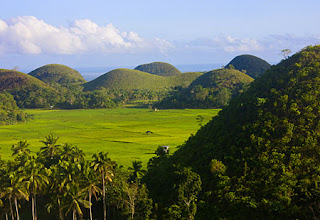
The island of Bohol is home to hundreds and hundreds of closely clustered limestone domes called the Chocolate Hills because of their carpet of grass, which turns brown in the dry season. Scientists aren’t sure how they formed, but hopefully it wasn’t due to a giant water buffalo that got a bad case of food poisoning, as one local legend holds.

Bonneville Salt Flats, Utah

If you think the Great Salt Lake is salty, head a little ways west and checks out the Bonneville. This 30,000-acre area is encrusted with a layer of salt up to five feet thick, the leftovers from a Pleistocene-era lake that covered parts of three states. It's estimated that the salt flats hold 147 million tons of salt, enough to keep your shaker filled for quite awhile.

Shilin, China

Shilin translates to “stone forest,” and this set of karst formations in southwestern China’s Yunnan Province really does look like a forest of stone. The stone pinnacles, some of which reach nearly 100 feet toward the sky, are believed to be more than 270 million years old. Visiting after sunset is an especially unearthly experience.

Split Apple Rock, New Zealand

Remarkable rock formations are plentiful in Abel Tasman National Park on New Zealand's South Island, but none is weirder than Split Apple Rock, rising from the water of Tasman Bay. The giant boulder has been broken in two pieces so cleanly that it’s almost as if a giant hit it with an ax.

World Underground Attractions

Filed under by Nahal Ahmed on 4:13 PM

Secret Subway Station, New York

Curved arches, exquisite tiling, skylights — in a New York City subway station? Savvy riders have found that if they stay on the No. 6 train after its final stop in lower Manhattan, they can view the lovely City Hall Station as the train makes its turnaround to go uptown. The Transit Museum also occasionally runs tours.

Colosseum, Rome

One of the world’s newest underground experiences — the tour debuted in October 2010 — is a place where no one went enthusiastically two millennia ago: the underground chambers of Rome’sColosseum. It was here, after all, that slaves were kept before being forced to fight for their lives in front of enthusiastic audiences.

Churchill War Rooms, London

This secret command center, used by the British Cabinet during World War II, was set in the cellar of London's Treasury Building. Abandoned after the war, it was rediscovered in the 1970s by historians who were stunned to find everything in it practically intact since August 1945. It’s a superb museum today.

Titan Missile Museum, Sahuarita, Ariz.

The only outstanding Titan missile silo still has a defanged missile in its launch duct. Visitors to this museum can view it, along with a control room in which everything is mounted on springs to reduce spoil should a missile land nearby. If you plan well in advance you can appeal to bunk here overnight, just feet away from the warhead.

Wieliczka Salt Mine, near Krakow, Poland

A UNESCO World Heritage Site, this nine-story hole in the ground is home to superb statues, bas relief and full chapels carved out of salt by miners over the centuries. The mine goes down nearly 1,000 feet and includes a massive salt lake at its heart.